
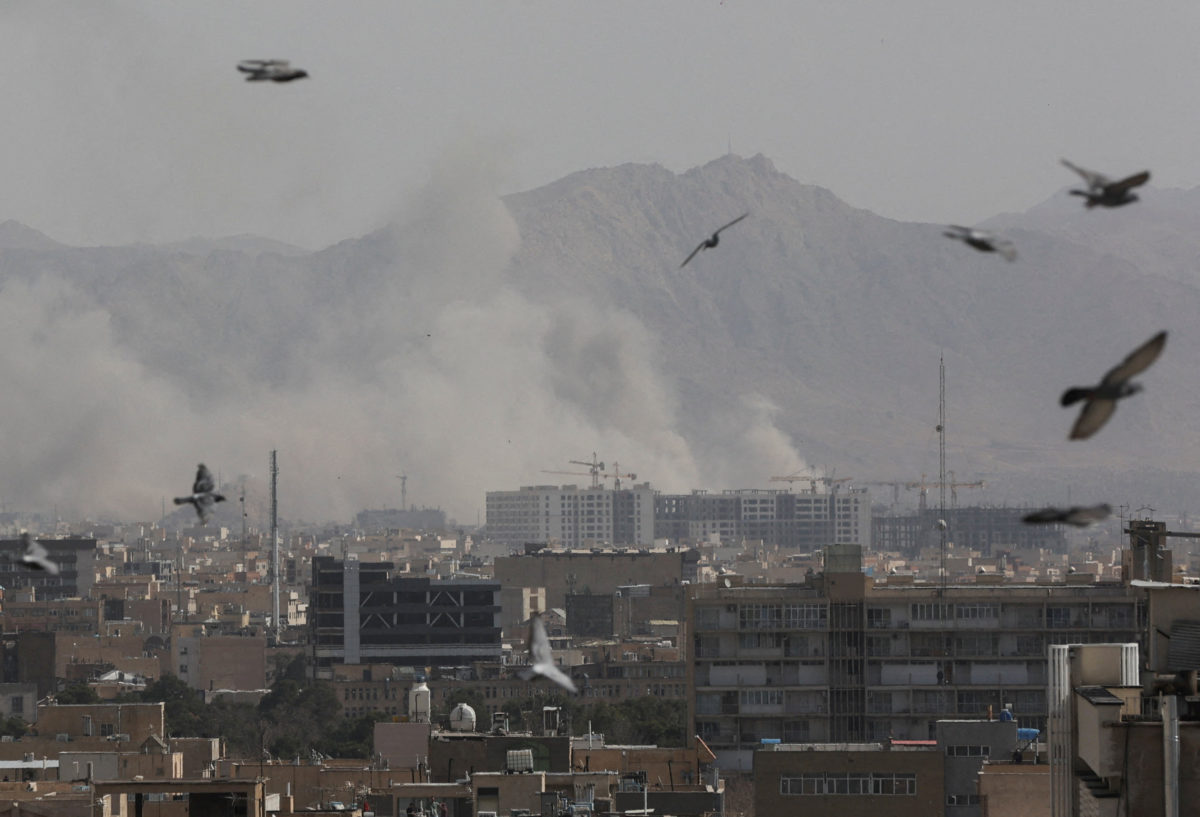
The world has entered a perilous chapter in Middle Eastern history. On 28 February 2026, Israel and the United States launched a coordinated military offensive against Iran — a dramatic escalation that is reshaping regional dynamics and global geopolitics. The scale and intensity of this conflict mark it as more than a clash between longtime adversaries: it is a crisis of strategic order with consequences for millions of civilians, dozens of states, and global markets.
This joint operation — widely described in reporting as involving extensive airstrikes on Iranian military, nuclear, and leadership targets — represents the culmination of years of failed deterrence and fractured diplomacy. Iran responded within hours with ballistic missile and drone strikes not only on Israeli territory but across the Gulf region, targeting U.S. military bases in Qatar, Bahrain, Kuwait, and the UAE.
A Turning Point in Regional Strategy
The official justification offered by Israel and Washington centers on eliminating an “existential threat” posed by Iran’s nuclear and missile programs. Israeli leadership framed the offensive as necessary to disrupt capabilities that, they argue, could tilt the strategic balance irreversibly against them. Iran, conversely, cast its retaliation as a legitimate defense against what it calls unlawful aggression and a threat to its sovereignty.
This moment is not a spontaneous burst of hostilities but the result of profound structural tensions: a decades-long security dilemma in which each side’s efforts to deter the other have only heightened insecurity. The recent strikes follow earlier wars and skirmishes — notably a 12-day conflict in June 2025 that involved extensive Iranian missile attacks and air campaigns — and prolonged diplomatic deadlock over nuclear negotiations.
The Human and Humanitarian Toll
The human cost of this escalation is already stark. Early reports from Tehran and other Iranian cities have documented civilian casualties — including tragic strikes on a school in Minab — as well as widespread infrastructure damage. Sirens, airspace closures, and evacuations have become daily realities for communities across the conflict zone.
Beyond the immediate loss of life, such violence fuels deep social trauma and erodes any remaining public appetite for diplomatic compromise. History shows that prolonged civilian suffering rarely produces surrender; it instead hardens societies, strengthens hardline political currents, and diminishes the space for negotiation.
A Region on Edge
What began as a bilateral confrontation has rapidly morphed into a regional crisis. Iran’s retaliatory strikes have not been confined to Israel; they have reached U.S. bases and host states across the Gulf — states that had previously sought to balance their relations with Tehran and Washington.
Neighboring countries are bracing for spillover. Airspace closures from Tehran to Abu Dhabi have disrupted international travel. Gulf Cooperation Council (GCC) states — once cautious about open confrontation — are now grappling with the direct impacts of missiles flying over their territories and threats to vital infrastructure.
International responses reflect this widening turmoil. The United Nations Security Council has convened emergency sessions, while global leaders have issued urgent appeals for restraint. Russia has condemned the strikes as “unprovoked aggression,” underscoring the broader diplomatic fractures that this conflict has exacerbated.
The Geopolitical Stakes
At stake is more than the future of Iran’s nuclear ambitions or Israel’s security doctrine. This crisis tests the very architecture of Middle Eastern order that was painstakingly constructed — imperfectly though it may have been — over decades of Cold War-era balances, peace treaties, and deterrence frameworks.
The United States, long a dominant security guarantor in the region, faces a dilemma: how to support an ally’s security without being drawn into an open-ended war that could reshape global alignments. Iran, under relentless pressure from sanctions, internal repression, and economic strain, has few strategic outlets beyond demonstrating its capacity to retaliate.
Meanwhile, states that once sought neutrality or quiet engagement — from Oman and Qatar to Saudi Arabia — find themselves forced into uncomfortable positions. Omani officials, for example, had been actively mediating discussions between Tehran and Washington — discussions that collapsed on the morning of the strikes.
The Road Ahead: Escalation or Restraint?
There are no easy answers. The current trajectory suggests three possible futures:
- Managed De-escalation — where backchannel diplomacy, possibly mediated by neutral regional actors, leads to a temporary ceasefire and a return to negotiated constraints.
- Prolonged Attritional Conflict — a grinding war of missile exchanges, proxy actions, and intermittent strikes that entrenches instability and inflicts long-term regional damage.
- Full-Blown Regional War — a worst-case scenario in which additional states — whether through alliances or threat perceptions — are drawn into direct conflict, making a negotiated settlement exponentially harder.
What is certain is that the era of contained, indirect confrontation in the Middle East has ended. The current crisis has collapsed the old restraint mechanisms and opened a new chapter defined by direct interstate conflict with wider implications than we have seen in decades.
War, by nature, unleashes forces that defy simple control. The present trajectory risks not merely strategic gain for any one party but strategic loss for the region as a whole. The human, economic, and diplomatic costs will be borne not just by Iran and Israel, but by Gulf societies, global supply chains, and fragile international institutions.
If there is a strategic imperative now, it is this: a recommitment to diplomacy, bolstered by credible enforcement mechanisms, that can reverse the slide into open-ended chaos. Only by reconstructing clear communication channels, shared red lines, and mutual incentives for peace can the region avert a broader conflagration.
The world should watch closely — not just the headlines of missiles and strikes, but the spaces where negotiators, statesmen, and regional voices might yet find a path back from the brink.
Posted by: MENA Affairs, Academy of Analytics and Research- AAR