
As the United States marks the 250th anniversary of its Declaration of Independence, America250 is more than a commemoration. It is an occasion to reflect on the values that have shaped the world’s oldest constitutional democracy liberty, opportunity, innovation, resilience and to ask how those ideals should guide its partnerships abroad. For Bangladesh, the milestone offers a timely moment to look at one of its most consequential bilateral relationships and ask: what should the next chapter of U.S.-Bangladesh relations look like?
The answer lies less in trade figures and diplomatic communiqués than in how far the relationship has already travelled. What began as a development partnership in the aftermath of Bangladesh’s 1971 independence has grown into a multidimensional engagement spanning trade, education, public health, climate resilience, maritime security, counterterrorism, and humanitarian cooperation.
The roots of U.S.-Bangladesh relations extend further back than many realise. In 1792, President George Washington appointed Benjamin Joy as America’s first consul to Fort William in Calcutta, laying the foundations of one of the United States’ earliest diplomatic engagements in Asia. More than two centuries later, those early contacts have matured into ties that shape economic growth and strategic stability across the Indo-Pacific.
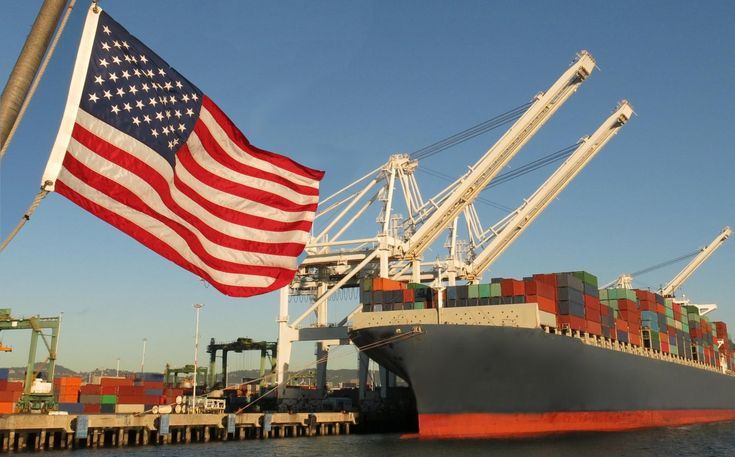
Economic ties remain the cornerstone of U.S.-Bangladesh relations. In FY2024–25, Bangladesh exported goods worth US$8.69 billion to the United States, accounting for about 18 percent of its total export earnings. By early 2026, Bangladesh’s share of the U.S. apparel market had risen to 10.53 percent, placing it alongside China and Vietnam as one of America’s leading apparel suppliers. The United States has historically been Bangladesh’s largest foreign investor, with a U.S. FDI stock of nearly US$4 billion in FY2023, including approximately US$2.8 billion in the gas and petroleum sector led by Chevron. Although the U.S. investment stock declined to around US$1 billion by FY2025 following substantial profit repatriation in the energy sector, American companies continue to maintain significant investments in natural gas, power, banking, consumer goods, technology and manufacturing. Meanwhile, Bangladesh imports U.S. cotton, wheat, soybeans, LNG, commercial aircraft and industrial machinery, reflecting the increasingly diversified nature of bilateral trade.
But the economic relationship carries a structural imbalance: Bangladesh depends heavily on U.S. market access, while Bangladesh accounts for only a sliver of total American trade. That asymmetry has grown sharper as Washington’s trade policy tilts toward protectionism. The Reciprocal Trade Agreement signed in February 2026 captures both the promise and the tension of this moment cutting U.S. tariffs on many Bangladeshi exports to 19 percent and granting preferences for apparel made with American cotton, in exchange for Bangladeshi commitments to lower tariffs and non-tariff barriers over the coming decade. Supporters call it a pragmatic hedge that protects Bangladesh’s competitiveness. Critics warn it is lopsided, squeezes customs revenue, and cedes regulatory ground to U.S. standards. Both views have merit. But in an era of economic nationalism, preserving market access will require skilled negotiation, not ideological rigidity especially as U.S. courts continue to weigh the limits of executive tariff authority, adding further uncertainty that Bangladesh must hedge against through export diversification.
Trade, however, is only one dimension of a far broader relationship. American scholarships and fellowships have educated generations of Bangladeshi professionals, building networks of trust that outlast political cycles. Climate cooperation is another natural frontier: Bangladesh faces existential threats from rising seas, cyclones, and salinity intrusion, while the U.S. holds world-leading expertise in climate science and resilient infrastructure. Humanitarian cooperation matters too, Bangladesh hosts more than a million Rohingya refugees, and Washington has been among the largest contributors to their support. On security, the 2016 Holey Artisan Bakery attack catalyzed deeper counterterrorism and maritime security cooperation, formalized through annual Security and Partnership Dialogues.
Bangladesh’s geography, bridging South and Southeast Asia at the head of the Bay of Bengal has only heightened its strategic value amid intensifying great-power competition. Yet Dhaka has charted its own course, articulating an Indo-Pacific Outlook rooted in a free, open, and inclusive region while preserving its tradition of strategic autonomy. Washington would do well to engage Bangladesh as an independent actor pursuing its own interests, not merely as a pawn on a larger geopolitical board.
None of this erases genuine friction. U.S. sanctions on Bangladesh’s Rapid Action Battalion, Dhaka’s exclusion from the Summits for Democracy, and recurring American concern over elections and human rights have all tested the relationship. Bangladesh’s recent political transition has drawn fresh U.S. attention to questions of inclusive governance and the rule of law. These tensions are real, but they are not disqualifying. Mature partnerships are not measured by the absence of disagreement but by the capacity to keep talking through it as the continued Partnership Dialogue, despite political friction, demonstrates.
As Bangladesh prepares to graduate from the Least Developed Country (LDC) category to that of a developing country on 24 November 2029, its relationship with the United States must also evolve in both spirit and substance. The traditional donor–recipient framework should gradually give way to a partnership anchored in investment, innovation, technology transfer, and mutually beneficial trade. Beyond garments and conventional manufacturing, bilateral cooperation should expand into high-value sectors such as artificial intelligence, biotechnology, digital infrastructure, clean energy, advanced manufacturing, and the digital economy. Bangladesh’s youthful workforce, expanding entrepreneurial ecosystem, and strategic location make it an attractive partner for American companies seeking to diversify and build more resilient global supply chains. At the same time, the vibrant Bangladeshi diaspora in the United States including physicians, engineers, entrepreneurs, researchers, and academics remains an underutilised bridge for strengthening commercial, technological, educational, and cultural ties between the two nations.
America’s 250th anniversary is more than a celebration of its past; it is an invitation to imagine its future. For Bangladesh, the moment offers an equally compelling opportunity to reimagine a relationship that has grown far beyond its origins in development assistance. From the devastation of 1971 to becoming one of Asia’s fastest-growing economies within a single generation, Bangladesh has demonstrated remarkable resilience and ambition. As one nation reflects on two and a half centuries of independence and the other prepares to enter a new phase of development after its graduation from the Least Developed Country (LDC) category, the time has come to forge a partnership defined not by aid, tariffs, or periodic diplomatic frictions, but by shared investments in innovation, climate resilience, secure supply chains, maritime security, and a stable, prosperous Indo-Pacific. If Dhaka and Washington can look beyond the constraints of the past and embrace a relationship rooted in mutual respect, shared prosperity, and common strategic interests, the next chapter of U.S.–Bangladesh relations may prove even more consequential than the last an outcome worthy of America’s 250th anniversary and Bangladesh’s aspirations for the decades ahead.
Author: Fazle Rabbi, Director of Legal and Compliance at Academy of Analytics and Research – AAR